


Eötvös Loránd University has launched its Flagship Sustainability Program with a professional conference. During the opening event, the university presented its activities related to the achievement of previous sustainability goals and defined its development directions up to 2030. This initiative opens a new era in the life of the university: in the future, sustainability will play a decisive role in education, research, innovation, campus operations, and community building.
On January 23, 2026, Eötvös Loránd University launched its second flagship program. The University Center for Sustainable Development Goals is part of ELTE's three tightly interconnected flagship programs, together with the Knowledge Center for AI and Disruptive Technologies and the Student-Centered Digital Skills and Competence Development Center launched in December.
The new, comprehensive development program
aims to make sustainability present at a systemic level in the operation of ELTE:
in education, research, innovation, campus development, community building, and ensuring equal opportunities. The program provides a unified strategic and planning framework for those ambitions that strengthen the university’s social responsibility and international competitiveness in the long run.
In his opening speech, Lénárd Darázs, Rector of ELTE, emphasized that sustainability is one of the most complex strategic initiatives and key breakthrough points of the university's rectorial program, requiring an institution-wide perspective and measurable, feedback-based actions. ELTE intends to make its activities transparent and comparable in alignment with the United Nations Sustainable Development Goals (SDG framework). He highlighted: ELTE’s goal is to establish a resilient, future-proof university environment, which manifests equally in education, research, and social engagement.
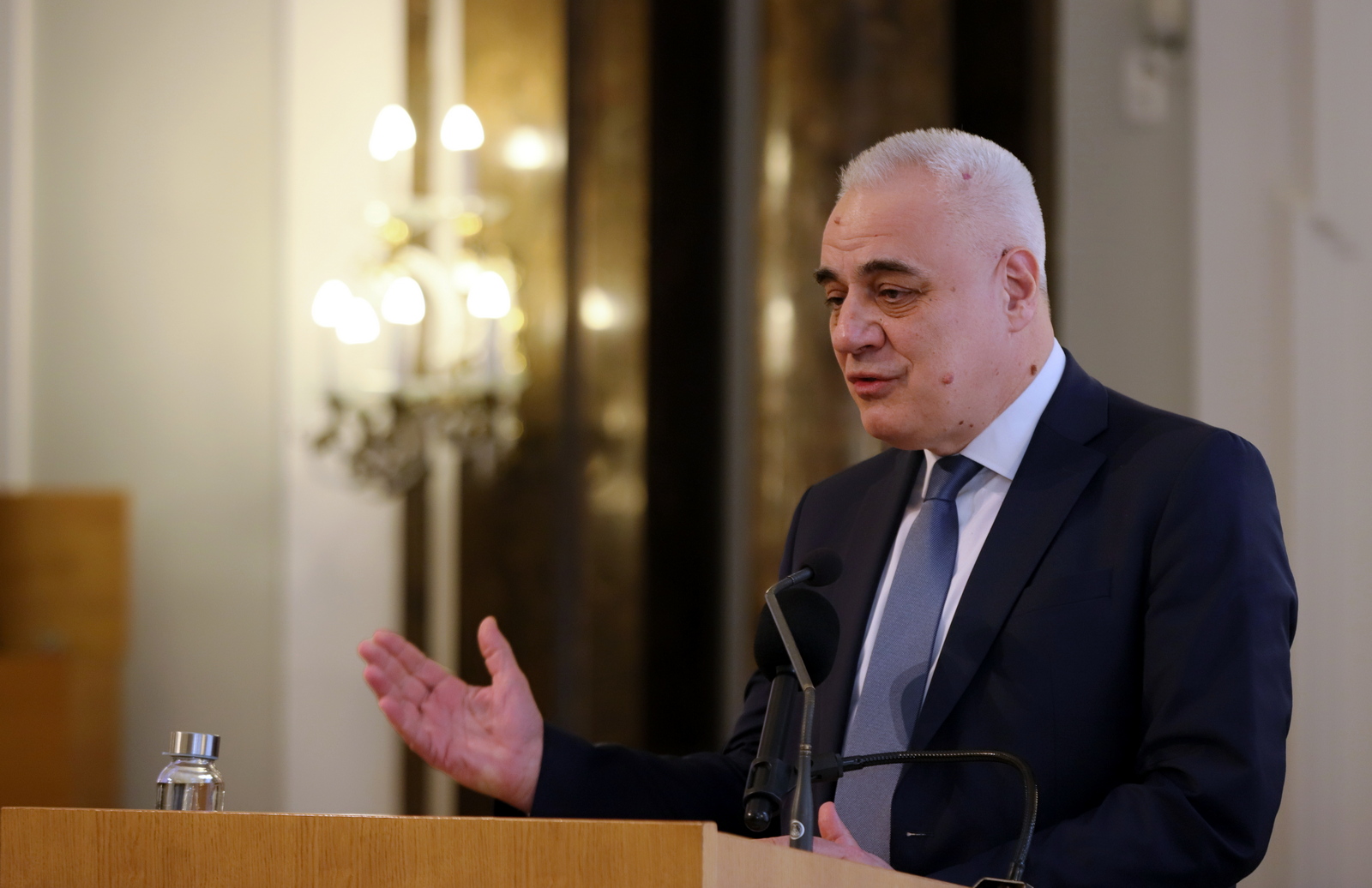
The professional lectures at the conference explored national and global contexts of sustainability, as well as the role and opportunities of ELTE, from governmental, university, and international perspectives.
Csaba Gondola, State Secretary for Circular Economy and Climate Policy at the Ministry of Energy, drew attention in his lecture to the fact that sustainability is one of the defining global megatrends of our age, in which green and digital transitions occur simultaneously, and which should not be approached as an option but as an inevitable necessity. The State Secretary emphasized that in this process, comparable to the Industrial Revolution, universities play a key role in knowledge-based adaptation, as environmental objectives can only lead to a successful and “orderly transition” together with economic and social sustainability.
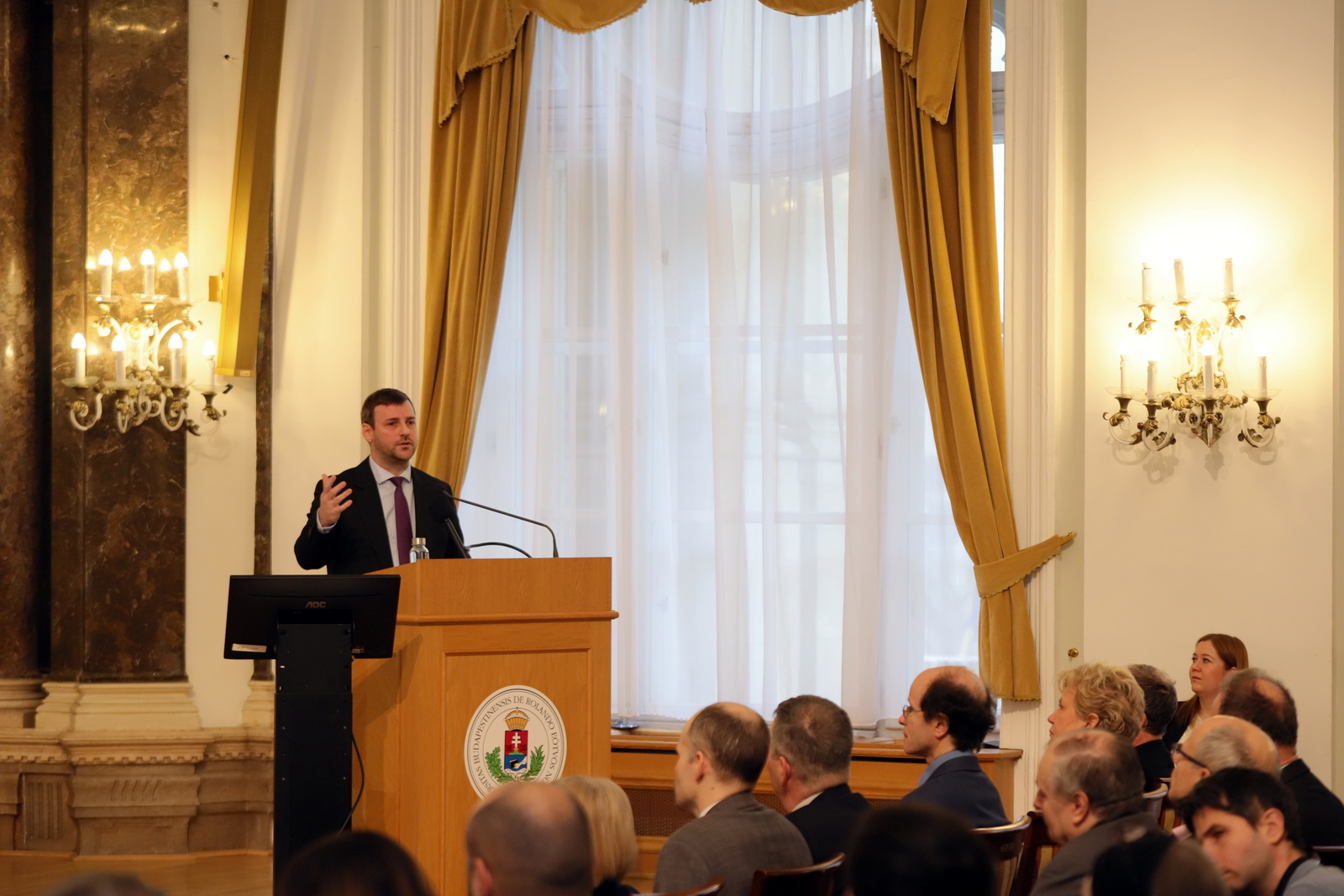
The foundations and vision of the Flagship Sustainability Program were presented by Judit Mádlné Szőnyi, ELTE’s Vice-Rector General and the program's coordinator. She stated that sustainability is an organic part of the university’s quality development plan until 2030, while the program is built on three main directions: implementing the flagship program itself; developing core activities with SDG relevance; and horizontally enforcing equal opportunities and inclusion.
The vice-rector gave an overview of a forward-looking, internationally unique analysis of the institution’s education and research activities supported by artificial intelligence, which confirmed that
ELTE’s sustainability base is already unique today.
The overwhelming majority of the research portfolio—over 76% (375 projects)—is linked to sustainability goals, 62% of the courses taught relate to sustainability, and these elements are also widely present in the university’s third-mission activities.
The focus of ELTE’s innovation activity is on health and well-being, climate protection, and social innovation—including quality education and equal opportunities. Based on the uniquely versatile background of a research university, educational and research innovations are robust, as exemplified by several national projects led by ELTE (TINLAB, DOKK), while knowledge transfer related to developments is particularly strengthening in the fields of technology, circular economy, and climate (KKIC).

In addition, sustainability is an important aspect in campus developments (energy upgrades, building renovations, and accessibility) and in organizing community programs that shape attitudes.
Based on this foundation, the Flagship Sustainability Program offers a clear vision, operational framework, structural focus, and development directions for ELTE’s projects connected to 21st century sustainability development goals.
The international dimension is strengthened by the CHARM-EU university alliance, which supports ELTE’s sustainability goals through best practices and joint developments in education, research, and institutional operations. Ferenc Takó, head of the CHARM-EU office, emphasized that the alliance supports the set goals with joint educational-methodological innovations, training elements focused on sustainability (modules, micro-certificates, winter and summer universities), and by developing mobility and virtual cooperation models.

According to ELTE’s development cycle up to 2030, sustainability is the foundation of the university’s operation and culture, rests on a unified data system and measurable goals, and represents outstanding performance even in international comparison. In service of these goals, the Flagship Sustainability Program simultaneously strengthens the university’s competitiveness, social responsibility, and contributes to building a more inclusive and sustainable future.